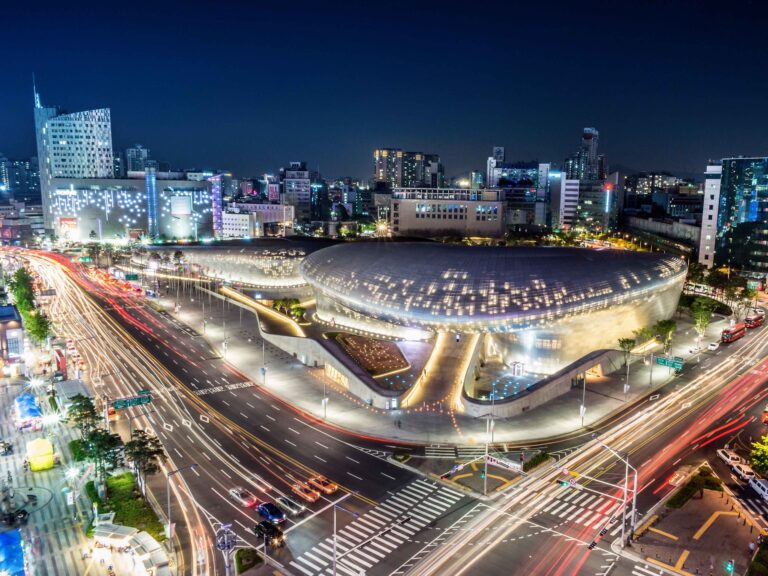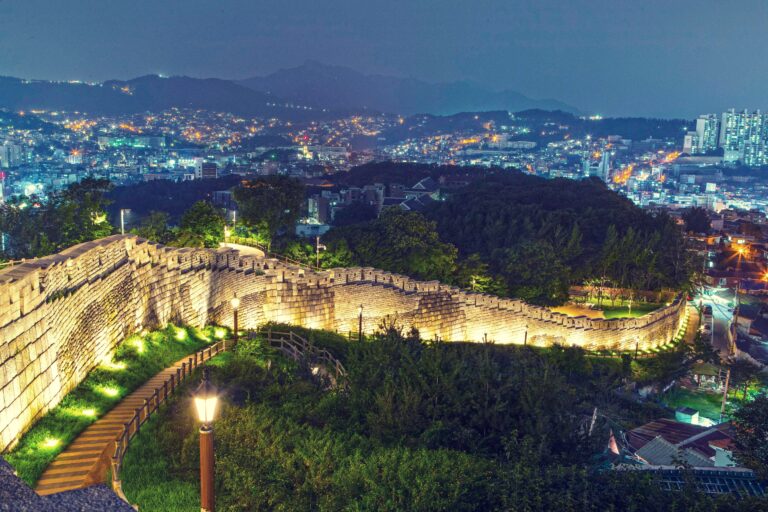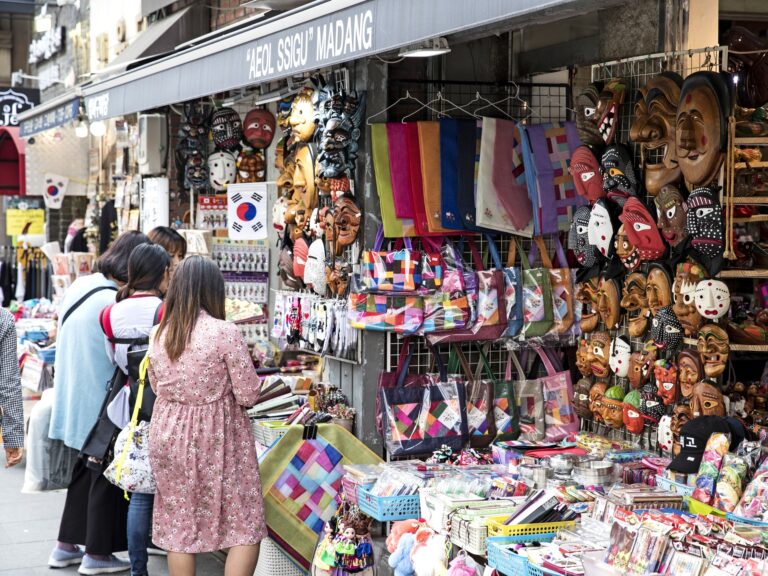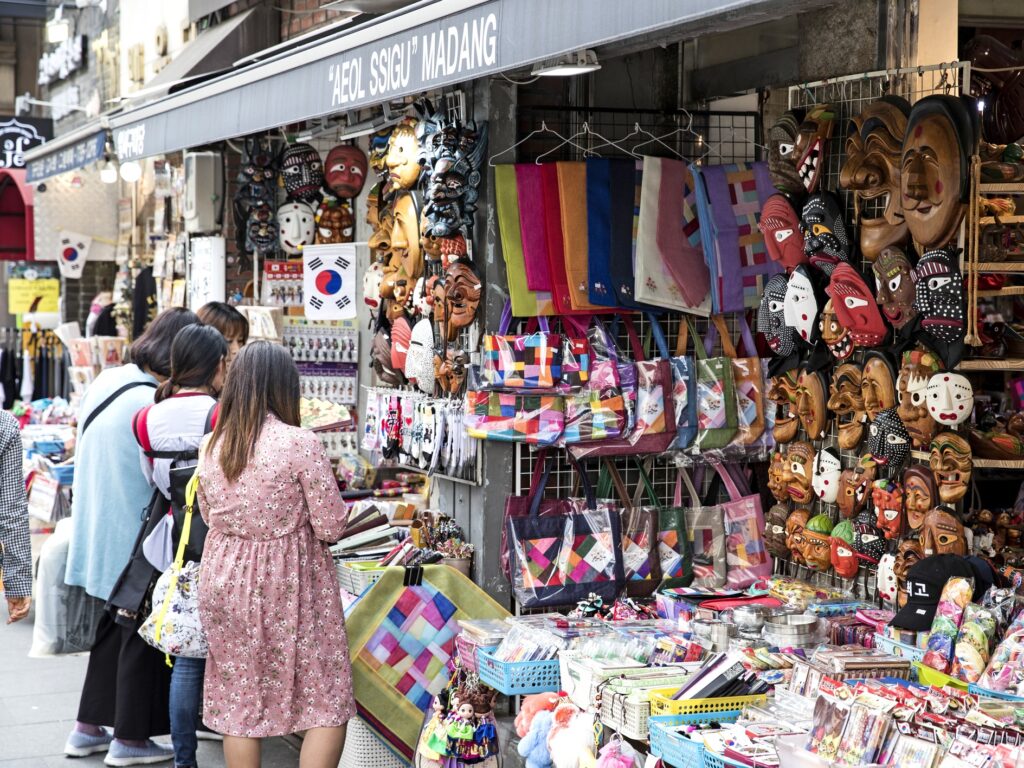
People rarely ask this because they need a list of hotels. They ask because Seoul offers too many plausible answers at once. Jongno looks convenient for the palaces. Hongdae sounds livelier. Myeongdong appears in nearly every search result, and Gangnam carries a name people already recognise. All of them work. Not for the same trip.
The more useful question is not where to stay. It is what the hotel location should make easier. Once that is settled, the city stops being confusing and the shortlist gets much shorter.
Let the itinerary choose the area
A beautiful room can still be the wrong base if the first and last hour of every day disappears into crossing the city. The itinerary decides the neighbourhood, not the other way round.
Start with what is already fixed. If the days revolve around Gyeongbokgung Palace (경복궁), Bukchon (북촌), galleries, markets, and the older centre, then Jongno (종로), Insadong (인사동), and Gwanghwamun (광화문) keep more of the trip inside a manageable radius. If cafés, shopping, independent brands, and late evenings matter more, Hongdae (홍대) and neighbouring Mapo (마포) fit better. Jamsil (잠실) and Gangnam (강남) make sense when the plan already leans toward eastern or southern Seoul.
Not every stop needs to sit beside the hotel. What matters is that the journeys you repeat are the easy ones. One cross-city day is fine. Building the same long transfer into every morning is a different thing.
A central hotel is only central in relation to the places you plan to visit.
What you want outside the door
Two hotels can be equally well connected and still produce completely different evenings. In Insadong, the streets outside hold traditional shops and restaurants, and they get noticeably quieter later at night. In Hongdae, the foot traffic, bars, and street activity carry on much longer. Near the Han River (한강), the surroundings feel more open and calm, and the late-night food options shrink accordingly.
This is one of the most overlooked parts of choosing a neighbourhood. Subway stations and room photos get compared carefully, and then the area turns out to be too quiet, too busy, or too visitor-focused for the way that particular trip is going to run.
The final two hours of the day are the test. Wandering without a plan, finding dinner near the hotel, staying out late. Or leaving the busy part of Seoul behind before sleep. Neither is better. The answer changes the address.
A station nearby is not the whole story
Seoul’s public transport makes a wide range of neighbourhoods workable. That is the good news. The less obvious part is that the distance shown on a booking site does not describe the actual journey.
A hotel can sit five minutes from a station where the useful line still requires a transfer. A major interchange can involve a long walk underground. An airport connection can look direct while reaching the right platform with luggage adds real time. Buses run faster on some routes. Taxis get unpredictable in peak traffic.
For a short trip, a simple route beats a famous neighbourhood name. One direct line, or a genuinely walkable cluster, saves more energy than being theoretically connected to everything.
Before booking, check three sample journeys on Naver Map or KakaoMap: hotel to the first morning stop, hotel to wherever the evening is likely to happen, and hotel to the departure point. That small test says more than the phrase “near the subway.”
Room size matters sooner than expected
Seoul has excellent hotels across every price level, and central rooms can be compact. The square metre figure matters more than it looks, especially for two people with large suitcases, a family sharing one room, or anyone staying longer than a few nights.
Look past the bed. Space to open luggage. A wardrobe deeper than a jacket. A desk that can actually be used. A bathroom layout that works for the number of people staying. A stylish room turns irritating fast when every bag has to be closed before anyone can walk past it.
Families should confirm the exact bedding rather than the maximum occupancy. Family room, triple room, and three guests allowed do not always mean three proper beds. Connecting rooms are limited in Seoul, so a request is worth confirming directly rather than treating it as settled.
One or two nights can absorb a smaller room in exchange for a location that works. A longer stay makes space and laundry access much harder to ignore.
Quiet is about the room, not just the district
A busy area does not automatically produce a bad night’s sleep, and a quiet-looking street does not guarantee silence. Room position, floor, windows, lifts, and nearby construction can matter as much as the district on the map.
In nightlife areas, street-facing rooms carry the obvious risk on Friday and Saturday. In business districts, early traffic and weekday activity show up instead. Rooms near lifts or service areas bring a different kind of noise, and connecting doors sometimes reduce the insulation between rooms.
A room away from the main road and the lifts is worth asking for, but it stays a preference rather than a confirmed feature unless the hotel says otherwise. One precise request lands better than five vague notes the front desk cannot realistically satisfy.
Price and value are different things
Seoul rates move sharply with the date, room type, cancellation policy, public holidays, and large events. Friday and Saturday nights cost more, and the room that actually suits the trip often disappears well before the hotel sells out.
Compare like with like. A cheaper prepaid room is not automatically better than a flexible rate, and breakfast for two shifts the total more than expected. A hotel farther out saves money per night and adds taxis, transfers, and lost time. Paying for luxury facilities makes little sense on an itinerary that leaves after breakfast and returns only to sleep.
Value here means paying for the parts of the stay that get noticed every day. Location, space, quiet, service, a view, breakfast. Not all of them at once.
Where the shortlist starts
For a first visit built around the historic and cultural centre, Jongno, Insadong, and Gwanghwamun are the sensible starting point. They make the older core easier to read and cut unnecessary movement out of a typical sightseeing week.
Hongdae takes over when late evenings, cafés, shopping, and a more spontaneous street atmosphere sit at the centre of the trip. Mapo works for a calmer riverside stay. Jamsil earns its place when the tower, the lake, the theme park, eastern Seoul, or the hotel itself is the reason for being there.
That is the first decision. The next one is understanding why journeys across Seoul take longer than the map suggests, and then matching these areas to actual hotels rather than star ratings.